This website uses cookies to analyse our traffic and to ensure you get the best experience. By clicking “Accept”, you agree to our Terms of Use and Cookie Policy.
WEBINAR REPLAY
Simplify Accounts Payable automation
Discover how to streamline payments and boost productivity with Al-powered solutions



Overview
Realising the benefits of invoice automation doesn’t have to be complex. With government agencies required to pay 90% of all domestic trade invoices within 10 business days, ensuring your finance team has the right tools has never been more critical.
Replay the webinar now and hear from Kāinga Ora and Health New Zealand about the journey they took to achieve accounts payable automation, and the lessons learnt.
Summary
Key takeaways from this webinar:
- Learn from the experiences of fellow organisations.
- Discussion on the pending e-invoicing deadline for PEPPOL.
- Guidance on how to start your invoice automation journey if you haven’t already.
Watch the Webinar
Webinar Transcript
Read full transcript
Simplify Accounts Payable Automation Discover how to streamline payments and boost productivity with Al-powered solutions-20250623_220117-Meeting Recording
June 24, 2025, 8:59PM
1h 1m 41s
Irene Direnko-Smith 0:13
Good morning, everyone.
We will start in a couple of minutes just giving everyone a chance to join us at 9:00.
Sandy McGee 1:01
OK.
Irene Direnko-Smith 1:04
All right.
Very warm welcome. Good morning and welcome to the simplify accounts payables automation webinar with the focus on the government, because you will hear from 2 government agencies talking about their journey and also purple invoicing. However, if you’re not one of the government customers, don’t worry, I think you.
Find plenty of insights today that don’t necessarily relate to the government implementation of accounts payable and invoicing.
Our agenda for today, we will start with an introduction to Fujifilm and Esker and the technology that you will be hearing about today. So you understand the, I guess the context behind it and then we will start at 9:10.
We will start a panel discussion with Lindsay Horton, who is a manager of financial systems at Kangora, and Mel Patrimonio, who’s a group manager, transactional services health New Zealand.
Both of them will share some really useful insights about implementation of accounts payable.
Automation and their thoughts around E invoicing as well.
We will then start with the live Q&A at 9:40.
Please use the Q&A button to ask the questions that you’d like at the top of the of the screen you’ll find AQ and a. Just pop your question in there, and then at 9:40 we will start asking your questions.
We will wrap up at 9:55 and finish the webinar at 10:00 AM Sharp.
So just a couple of, I guess, insights about Fujifilm and process automation and process automation.
Our mission is to help keep businesses work smarter by improving and automating their financial processes.
We partnered with Esker in 2014 because we recognized the advanced strategy around both cloud and AI back in 2014 and over the last 10 years, we have deployed more than 100.
Esker projects locally here in New Zealand.
That automated both accounts payables and accounts receivables side of financial processes.
So a little bit about Esker again and fujifil, we have over 10 years of very strong partnership and esker globally has 6000 customers in New Zealand. We have about 100 and Esker automates about a billion transactions every year. Again in New Zealand we automate with Esker A.
Bit more than 3,000,000 transactions annually escorted access point for peppol and over 60 countries and it has been a certified access point.
For New Zealand and Australia since 20.
20 We’ve got a number of customers in New Zealand using Esker, 4 accounts payables and accounts receivables processes.
Many of them are governed government agencies, but we also have a number of large and small to medium sized companies using esker to automate their financial processes.
Esker’s platform is positioned as the automation for the office of the CFO because it covers and automates most of the back office financial processes you will find in most organizations. Today, our focus will be on accounts payables on the left hand side of the esker what we.
Call flowers or petals and it also covers areas of procurement, contracts, management, supplier management, sourcing and expense management.
And on the other side of the equation, we’ve got order to cash or invoice to cash.
So if you’re processing orders from B2B customers, then Asker can help you manage your orders.
Manage supplier. Sorry, customer inquiries, credit management, collections management claims and deductions.
Cash allocation and also invoice delivery including peppol, the platform is underpinned by Esker synergy artificial intelligence that helps companies extract information from the documents they receive as well as automate a number of manual processes such as.
Coding invoices.
Or matching invoices and providing predictive analytics.
SK is a platform according to the Gartner Magic Quadrant Research Organization that looks into areas such as ability to execute research and development as well as customer feedback. And ESG is the only platform that is a leader in Gartner Quadrant for both accounts payables and accounts receivables applic.
So accounts payables applications covers AP automation and E invoicing and you can see that quadrant on your left. And then on the right is accounts receivable, accounts receivable and this area covers.
Collections, payment allocation, invoice delivery and credit management.
So esker, as I say, the only platform that features in both of these Gartner quadrants.
Now we ran this event live in Wellington about a month ago.
And what we realized is we also needed to cover a little bit more about peppol invoicing, what peppol is.
So we’ve included a couple of slides to cover and give you a bit of an introduction of what peppol is. But if you have more questions, please feel free to use the Q&A button.
To ask some questions both from from me as well as our panel today.
So Peppol stands for Pan European public procurement online standard for E invoicing.
This is a standard that is adopted by more than sixty countries globally, and it’s very it’s a mature, very well adopted standard that New Zealand has adopted since 2019 and in New Zealand it governed by.
MB Ministry of Business and Innovation, as I say, since 2019, ESKER has.
Bing a.
Certified access point for PEPPOL in New Zealand since June 2020 in New Zealand and in Australia since April 2020, but Asker has been doing invoicing processing in other countries from about 2016, 2017.
Now looking at the peppol, what we wanted to highlight is the four corner model that is implemented in government by MB in New Zealand. So in the four corner model, you’ve got a sender which is in case of accounts payables, your customers that are sending invoices to the.
Access Point Sender and these invoices are being translated and delivered to the right address. Being receivers address by the access point receiver.
And they arrive automatically to the to you.
As as.
A to you from your, from your supplier.
Sorry, the papl access point does the translation, but the standard invoicing means that you send this and receivers can just.
Configure one process, one standard, and then exchange that without having to change standard for every customer or every supplier.
That’s the that’s the rules of of Peppol and esker is the certified access point for both the sender and the receiver, meaning that you can send invoices.
Electronically with esker and you can receive invoices electronically with esker using the PEPPOL standard. Now in November last year, MB had announced the implementation of the requirement for most government agencies to be able to receive E invoicing and process invoices from suppliers within 5 days and that is.
Coming into effect from the 1st of January 2026.
So what I wanted to highlight today is.
That peppol is one of the elements that companies need to enable faster invoice processing.
But there are a number of other elements that companies need to remember about as they process invoices that can also generate delays and impact. How how quickly you can process your supply invoices.
So if you look at the slide, we have the step #1, which is always invoice capture for New Zealand in the last 10 to 20 years the most.
Common way of receiving invoices from suppliers.
This has been in PDF and there are many tools including ASCA that enable you to process PDF invoices automatically, similar to the way you would process an invoice via peppol or any other EDI format.
We don’t see many paper invoices, but over the last.
Some other countries still process a lot of paper invoices and we still see some paper invoices circulating in New Zealand.
So when you implement the peppol invoicing at this first step of invoice capture.
You remove the need to key in invoices manually from apdf or paper.
However, what’s worse to remember is that if you’re processing invoices with purchase orders, you still need to three-way match invoices, and you still need to validate the data that is coming to you from your suppliers.
Peppol make sure that the invoices you receive they. There are no mistakes of the RE keying type, but your suppliers can still provide an A purchase order.
That isn’t correct.
Or the data on the invoice that is incorrect.
So this is where validation come in place and you still need to have robust systems to be to be able to validate against the purchase order. And it’s good to receive and the data that is on that invoice.
You also need to be able to handle exceptions.
What happens if the purchase order isn’t correct or there is a price or quantity mismatch and you need to be able in most cases to cater for approval of exceptions or also invoices that come without purchase orders?
That would require still multi level approval coding and review before they can be transferred for payment.
So all of these steps contribute to potential delays and when you consider automating invoice processing, you need to consider.
And not just the ingestion method, but also how you going to process invoices through all the steps required to pay your supplier.
And what is the potential there for the automation and removal of manual steps and and delays at each of these steps?
So with this, I’ll wrap up the introduction and we will start the panel discussion.
With Mel and Lindsay.
So first of all, let me introduce Lindsay Lindsay Horton. He’s manager of finance systems at Kangora and has been working in finance for over 30 years.
He has a strong track record in strategy and transformation and passionate about optimising finance operations for technology and efficiency.
Lindsay, let implementation of esca, including invoicing with Oracle a business suite.
In 2018.
And he continues to work on digital initiatives and improvement projects including Oracle EPM cloud adoption.
As I mentioned, KANGORA has been using esker for a few years.
We implemented the project in 2018, so a reasonably good amount of time to gain efficiencies and and get the most out of the system.
So some of the efficiencies that can go Aura received from implementing Esker is reduced AP resourcing time, order processing off peer invoices, improved exception handling and full visibility into the invoice status as well as improved duplicate detection.
Esca has provided machine learning to automate processing, not just of invoices but also of the PDF PDF invoices that are arriving and previously would have been keyed manually and also escaped provided ability for kangora to process invoices using PayPal network.
So kangaroo is ready for that requirement as a 1st of January next year.
Our second panellist is Mel Patrimonio.
She’s a group manager for transaction services at Health New Zealand de Fata. Ora Mel started working in the health industry in 2009 as a receivables manager for health alliance and then her role expanded to include payables responsibilities. She is currently working on proposal to amalgamate the.
Former District Health Board’s transaction services teams to a national team.
And Mel previously worked with Phillips NZ Waste Management and Ford Motor Company.
Health New Zealand implemented esker on lieu recently.
In fact, some of the hospitals only went live earlier this year, but they already have some efficiency gains automating data extraction, invoice matching and reconciliation.
And they significantly reduced manual data entry errors, in particular on the larger multiline invoice invoices. Supplier communications have improved with better tracking tools for supplier communication.
Esker have enabled a a learning and.
Machine learning for invoices that come in.
Mostly via PDF and then as Galson provides for scalability to add volume and hospitals as required.
So 2 very different implementations from a point of view that kangora has been using esker for for a few years and then health New Zealand is a very recent implementation.
So as we put together our panel questions, what we tried to do is direct them. The most recent implementation questions to Mel, because that experience is very fresh.
In some of the results questions to Lindsay because they’ve had a bit more time to get used out of the system. So with that I will start with our first question and our first question will be to both Mel and Lindsay, but we’ll go to Lindsay 1st and.
It is reflecting on your journey.
What is the biggest challenges your organization faced during the transition to accounts payables, automation and how did you overcome this, Lindsay?
Lindsay Horton 14:38
Thanks a lot. Morning, everybody.
It says that was a good intro.
We’ve got quite a trek record working with Gisker and AP Automation.
So over that Oracle e-business suite on premise application.
We implemented that in 2012 and and you know way back in 2018, the biggest thing that we wanted to do was to progress the automation journey.
And the key challenge.
For me, really was just getting started so.
The big thing was to, you know, identify the the the benefits that were available from automation and to basically get my sponsors on site. The business engaged in the conversation so that we could actually.
See and realize and show what the benefits were of automating the AP side of things because we were processing a lot of invoices.
Manually and we had a lot of things that weren’t optimized.
So you know 80,000 invoices coming from a diverse range of suppliers, so.
It was.
It was really the benefits were quite easy to map out and and to make the case for change was the challenge in terms of getting the investment allocated to the project to get started. So that whole piece of doing the stakeholder engagement, engagement with the manager.
Financial services, the CFO and the Enterprise architect. Once we got that alliance going.
Then that was good because my financial system strategy had been around for a very well and we had top of the list on the road map was to commence the AP Automation journey. So that sort of got that going. And once we got the stakeholders behind us, we.
Were away.
We could get the ball rolling.
So I think the other element that was really challenging was getting the business ready.
We had a finance shared services entity already set up, so we’re pretty well positioned in the corporate office to to go.
They were.
They were change ready and they were.
They’ve been suffering for a long time under the volumes of the invoices, so they were pretty good. I guess the the problem was probably more out in the business. We had 300 requisitioners out around New Zealand.
That were creating purchase orders and and managing the interaction with the suppliers. So getting them on site and implementing some really good process around our accounts payable was was absolutely critical and a couple of things we did there to get that going.
So we had a user group. We engaged with a big portion of those 300.
And we also made sure that the business process was really clear.
So we needed a purchase order.
For every transaction and we hadn’t been too good at issuing those.
We had a lot of retrospective purchase orders, so we implemented an opio nogo policy and we put in some monitoring reporting. So every month you could see the business unit still actually raising the POS late and that was being escalated up and reporting at our senior management level.
So.
It affected a really good implementation of the the policy of making sure those apo there, because if the invoice comes in.
No matter what system you have, if you haven’t got Apo to match to it, then it’s not going to go anywhere. And I think the other thing was that the automation is one thing, but then getting the invoice out to the business and going through that process of.
Validating that it’s good to pay and getting the business to do the receiving is is a big, big piece.
So again, we had an education program with those 300 requisitioners that were doing the receding and we were monitoring how.
Fast they were were individually at doing.
The receding and encouraging them to do it within a day, so that implementation of the policy and the business process was pretty significant thing to to get right up front. And and that’s how we addressed those challenges.
Irene Direnko-Smith 18:55
Thank you very much. And I think as we as we implement the project and just going over the next couple of years as the quality of the master data, the purchase order data and the processes improved with that, with the monitoring, we could definitely see the results impro.
Over time as well. So I think probably to sum up part of it is always technology, but a huge part of it is the process and your people and how they work with documents.
So I think Mel, from your side, what are the most significant challenges?
Or Health New Zealand into Phata Ora during the transition.
Probably still ongoing.
Mel Patrimonio 19:30
Yeah, it is still in goings.
Hello everyone.
I think that Lindsay already talked about the change management and the mind shift of people when you can’t underestimate when you change from a manual process to something that’s automated where people don’t actually see what’s in front of them, they can’t actually enter.
And so shifting from that mindset is quite a challenge for health New Zealand.
I think that everyone is aware of the challenges that we have faced in the last two years.
And so we’re trying to implement.
There’s invoice automation within accounts payable against a backdrop of what is happening within Health New Zealand within changes in in the from a board to a commissioner, changes in our ELT and our SLT, which also meant changes in the direction of a structure. And even now we’re still.
To form a structure nationally because at the moment we’re still operating as 20 district health boards, sort of we’re trying to come together as one.
So trying to implement a national automation is very challenging because we have 20 different policies, 20 different ways of working, 20 different bank accounts, and you have all of these trying to.
Try to come to a standard where working and trying to find.
What are the business requirements that you have in the beginning?
You know when you set up your project, what are the business requirements that you have to have in order to fulfill the needs when sometimes?
From from me working from Northern Region initially and trying to have a view or perspective of what the whole nation would need was a was the biggest challenge in in this project because initially when we started with.
When we started dealing with.
Fujifilm. We really thinking only of the northern region, but that with a change in health New Zealand becoming into one that just blew up into this whole big national project.
So, so that was for us.
That was the biggest.
Challenge was trying to say Northern region only processes about 60,000 invoices a month, but now with the whole nation we were talking about 150,000 invoice a month that we need to process.
So that’s a big shift in mid project.
So that that was the biggest challenge and for how do you, how do you get over that is we had to try and find a common way. You had to find common ground to say this is these are the deal Breakers.
These are the things that we cannot disagree on PO first, for example.
That’s a big one, and there may be some other ways that you do differently because your setup is different.
Your supply chain is structured differently, but you have to find.
The common ground in order for you to have some sort of common standard by which it could all follow.
Irene Direnko-Smith 22:24
I think that’s that’s a really good background and perspective. And two, I think the amount of change and the complexity that your team had to had to deal with and it may seem I think for for the people on the call that this certainly applies to the larger.
Government entities and in the commercial space this doesn’t happen, but it’s quite interesting.
We we ran a similar lunch and learn event last week in in Auckland and we had a speaker from Rich’s transport Group who’s who’s given a lot of insight into their journey. But.
One of the lessons that really resonated with me was to try and find the common ground and automate for 90% or 80% of the cases, not focus on everything.
And that advice is probably the one that we see the most is the most useful insight.
Anyone could?
Rather than mindset that you could have when you start the project and it doesn’t matter what your company sizes or how many invoices to process, focusing on that common ground.
Is very important.
Picking the 80% that will give you the most benefit and then improving overtime I think is probably how you eat the elephant one bit at a time rather than trying to solve everyone’s problem at the same time. I think if we tried to do that, we.
Would still be delivering that project for Health New Zealand.
So with that, we’ll go to our second question.
And that is for Lindsay to begin with, since implementing invoice automation, what are the measurable improvements have you seen in efficiency, compliance and overall financial operations?
Lindsay Horton 24:02
Thanks Irene.
Yeah, look, I think it’s been significant for us.
Previously, before automation, we would really suffer in terms of managing the the peak flows of you know the 20th of the month or the end of the month where you get a lot of invoices coming in and we wouldn’t be able to get them processed in a time.
Fashion and that backlog would carry over for quite some time before the team could get on top of it. And a lot of overtime.
A lot of weekend work.
But now we’ve got that ability.
Data scale and and pretty much when the invoice comes in, assuming it’s got those base components on it of the the purchase order and the the quality is good, then we’re processing about 70% of those same day.
So when I say processing, I don’t mean paid, but we’re getting them and we’re matching them to the purchase order and then we’re getting them out to the business to review, invalidate and receipt the PO, so.
The the bit that our central team is doing.
Is is very much a lot better managed and you know the big thing that they really benefit from is that they can follow up on errant invoices a lot easier.
So the customer service they can provide to the supplier to show them where their invoice is at is so much better because they know exactly where those invoices are at because the tool gives us the visibility over.
Over exactly where in the process the invoice has got.
OK, so you know I think that’s a big thing.
We’re resolving problematic invoices in a lot more structured manner.
Manner, we’re putting them into queues and we’ve got people dedicated to following up those queues and addressing them. So you know, as a combination of all those things, we’ve got a platform where we can actually focus on enhancing and improving the time to pay. So we’re getting about.
20% of our invoices paid same day.
We’re using some little bit of magic to do that, so if they’re low value then we will auto resect them for the business because the business often incurs maybe anywhere between one and five days delay in terms of getting to receipt them.
So you know, if it’s low value low risk, then we’ll go through that process and we get get the invoices out the door the same day in many cases.
So yeah, it really gives us the platform.
To be able to refine our process.
And and really tweaked them and and get really good, efficient gains out of it.
Irene Direnko-Smith 26:38
Wow. So 20% of your invoice is paid on the same day?
That’s pretty remarkable for your suppliers.
Lindsay Horton 26:43
Yes, yeah, I know.
They love it that they raises the expectation for those that don’t get it same day though, Irene.
Irene Direnko-Smith 26:45
Yeah. No, that’s.
Yeah. Yeah. Makes sense. Yep. No.
Very good. And Mel from your perspective, obviously still early days, but where are the? What are the measurable improvements that you can see comparing to the old manual ways?
Mel Patrimonio 27:02
I think one of the things that we always struggled with was we pay the incorrect supplier. So with with Esca and its ability to check the invoice against the PO and against our master data, we on, you can actually check straight away whether this is this is not.
The right purchase order that was raised against the supplier, so you can you can check you can minimize paying the incorrect supplier we also.
A good.
A good benefit was also to check whether.
The debt business is has got the right GST. You know you can check the GST in the bank account.
Is this a correct supplier?
So in terms of.
Validating all that that has really helped us quite so much visibility of invoice has been processed in terms of it’s all in there. You can see where they are instead of being in someone else’s desk or in someone’s stable, you know it’s all in there you.
Can track your invoices.
So that’s a big gain for us. And so in terms of processing time, it’s become faster.
And attaching a document which is important for us attaching the PDF document against the invoice entry in our financial system that has that has made the time to do that so much quicker. We don’t even have to do that because it just part of of the posting process.
In in Esca and I think the other benefit is about reporting, although reporting for now is still still a bit early for us, but we can really see the benefits of the reports that are available in esker in terms.
Which supplies should be focused on which areas or what fields are always being in error so you can see that from the reporting.
So you can have a targeted approach in terms of which areas you need to improve on.
Irene Direnko-Smith 28:50
Makes sense?
Thank you very much.
So our third question is along one.
So we’ll start with Mel, just following and from following on from your recent experience, what do you think are the critical SuccessFactors for implementing successful accounts payable automation project and a follow up from that is what advice would you give to organisations, particularly in engaging stakeholders in?
Preparing for the change.
Mel Patrimonio 29:19
I think if you have to start a project you have to be very clear about your business requirements.
You have to spend so much time.
Irene Direnko-Smith 29:25
Mm hmm.
Mel Patrimonio 29:26
A lot of time actually gathering that do not underestimate that. And so in order to do that, you have to have your SME’s in the project involved in the project at the outset, because they’re the ones who will know the integrity stuff that you know that can.
Get forgotten or can get.
Ignored, not not take into account.
So so that to me is is very important. And then when you have those requirements, you have to have a very robust and exhaustive RFP process.
You have to make sure that you have to be critical about every supplier that presents their solution, and you have to pick. You have to make sure that you that it’s a match for your for what you want, because otherwise if they cannot realistically meet your your needs.
Then it’s it’s a no go.
The other thing that I learned was in the beginning was you have to have a full and comprehensive.
Training of your end users.
I know that the common way to do it now when you have a project is to train the trainer, but sometimes to well, I found that we that was not.
Initially that can that could work.
But you really have to have retraining if you haven’t trained a trainer, you have to have retraining and retraining because a lot of the knowledge and the data gets sometimes missed as you go from train the trainer to the trainer to the trainer. So. So those are the.
Key things.
For me.
Irene Direnko-Smith 30:54
Oh, that’s great.
And I think enrollment probably highlight from me involving the SMEs very early in the project is probably the most critical part of the project and the success making sure that they cross the requirements as you as you gather the requirements, but also the cross to testing and and.
Training is really something that makes a difference for the success of the project and.
What the result that you’re getting from day one as opposed to over the over the years?
So now thank you for that, Mel.
That’s that’s very good.
And.
Going to I think this time we’ll go to Lindsay first.
How did Esker contribute to streamlining your invoice processes?
And were there surprising results along the way?
Lindsay Horton 31:41
Yeah, I think I think Esca contributed.
A lot to streamlining processes. I think the big thing is it’s it’s that that tool that provides visibility over the end to end process and it’s that one source of the truth. It gives us confidence that we’re getting the invoices in via one channel and and we can.
Use its reporting to find the activity that’s going on for a particular supplier.
And it it really enables us to breakdown the process into its components into measure the performance of each parts of those those steps and and then to reach out to you know whether or not being they’re not going as well as what they could be often it’s to.
Do with people, and it’s often to do with people in the business.
So you know, we can use the the tool to.
Analyse what’s going on and to tweak it.
And and get the performance benefits out of the the pieces that are non optimized so you know some of the examples using the reports that come out-of-the-box that I’ve experienced is that you know, As for the central team that are managing the invoices initially we.
Could get the performance stats of the individuals who actually are working with the invoices.
And sort of map their the number of invoices they are processing individually across a period of you know a week.
For a month and you know some real high performance come out and they were just hidden shoulders above the rest. And what we did with it was we we sort of sat down with and said, well, what are you doing differently to everybody else? You know, why are?
Irene Direnko-Smith 33:24
That’s a great advice.
Lindsay Horton 33:25
You able to process so many more invoices than the others and and they were able to sort of share their techniques in terms of how they were utilizing the system to to really move things through quickly so.
You know, and the other example that we had was the CFO.
Was very keen on, you know, Hill was saying we did 20% of invoices same day.
He was pretty keen to get that up higher than 20%, so he he tasked us with maximising that, so we started an initiative around paying the same day and it was really the ability to use iska’s tools to analyse what was going on there that we.
Could actually tweak it and and we could influence.
Where we could make changes that that, that really would speed up the process.
Process. So. So yeah, it just opens up the the world of invoice processing from rather than being a bit of a black box where you’re not quite sure what’s going on. You just hope at the end of the day eventually the invoice will go through that that full.
Process and the money will go out the door to being.
A tool that provides you visibility on exactly where things are at and and allows you to manage the intend process way better than what we were ever able to do before.
Irene Direnko-Smith 34:39
Fantastic. Thank you. And Mel from your perspective, with those surprises along the way, things that you gained was esker that you didn’t expect.
Mel Patrimonio 34:46
I think the the features that in esker like for example providing direct feedback to the supplier within Esker. So you have you have things that you want to take up with the supplier things that you want to say to the supplier things that are wrong with the INV.
Irene Direnko-Smith 34:52
A.
Mel Patrimonio 34:59
So this direct e-mail and it’s contained within Esker you can track that and the and the history of it. So that is a really good tool for us because we can tell them, hey, you have no PO, please send it back to us with the PO and and.
Things like that. You can also CC your internal end user.
Or you can.
You know you can send an e-mail to various parties.
The history and tracking of the invoice within as it progresses through is also a really good tool, because you would know straight away if someone asked where’s my invoice.
You can see all it’s over here.
So it’s it’s there. You don’t have to look at any other e-mail or you know, crawl through thousands, hundreds of emails where that is internal conversation is a feature in ESCO, which I find, which we find very useful because this is.
Amongst end users and because we have, we have about 60 esca users across the country.
And trying to communicate to all those people is is quite a challenge.
So having that internal conversation where you can have a specific invoice and send out a message to a specific person regarding that invoice has been a big help to us.
Supply statement reconciliation has been also expedited. So that’s really a good feature.
And for us to correct invoice before it goes into our financial system before we post it.
It’s been a big help because otherwise it gets into our financial system and then we have to correct it.
There sometimes is is harder to do than if you correct it in in esker. Well, you can still say it.
Irene Direnko-Smith 36:28
Mm hmm.
Makes sense?
No, that’s great. And I think most companies will work with regardless of whether that’s a government or commercial organization.
There is obviously always a need for business case, so we inevitably help with some data to to put together into a business case for what return investment you can expect from putting in accounts payables, automation tools in place. And I think in most cases these generally center around.
The the improvements you get in keying data.
Or processing faster and auto posting. And that’s how often I think companies look at the process of automating invoices is really all about the automation aspect. The straight through processing the matching. And I think what we often don’t think about when we put together a business case is.
That the visibility that both Lindsay and Mel are talking about that normally is not something you can easily measure.
So it doesn’t end up as a as a main benefit, but.
Most companies we talk to post implementation. One of the biggest benefits.
Is in that visibility of where exactly the invoices are and then ability to communicate better with suppliers, again providing the visibility into this, the status of the invoice, the issues with the invoice that visibility makes it a much smoother process for both the company that is processing INV.
But also for suppliers, because they know exactly what they need to do and it’s much easier for them to resolve issues and improve their processes so you can process their invoices better.
So that’s probably a comment and observation from from us on on those insights.
And Lindsay, for you next one is how do you see invoice automation involving evolving?
Sorry, in the next three years and what new technologies and trends should organisations be ready to embrace in your opinion?
Lindsay Horton 38:19
Yes, I think this one for me is sort of focus on on the core activity than what we really want to see is a maximization of the use of the E invoicing channel. You know the history of e-mailing, then voice the PDF and then scanning it and.
And all the inherent problems of interpreting the data on the invoice and.
Getting the data into your financial system is still still a little problematic.
And and what I think is that if you can remove that and go to a invoicing and you’ve got those formats standardized and your suppliers are able to transact using that standardized format, then you know what you’re getting and you can process that invoice with a lot more.
Certainty that it’s come from a legitimate supplier.
And that the data that you’re getting is what you need.
To be able to satisfy yourself that there’s an invoice that you should pay.
So I think the maximisation of the people network and the E invoicing piece is is where we need to go and I think that facilitates the the two way visibility of what’s happening with the invoice as well, because I think the supplier wants to know that you’ve rece.
The invoice and it’s in the process of being paid.
And so using that electronic business to business channel.
Where you can actually see Inbet confirmation to the supplier of either you’ve paid it or it’s in the process of paying it.
I think 2 way communication is really, really valuable and you know for us the issuing of the PO to the supplier electronically would be hugely valuable as well, because then they can you can evolve the whole process of making sure that the invoice that you.
Irene Direnko-Smith 40:03
Mm hmm.
Lindsay Horton 40:17
Are receiving is actually relevant to the purchase order that you’ve issued.
And you know there will remove a lot of anomalies.
Irene Direnko-Smith 40:26
I can’t.
Lindsay Horton 40:26
And save a hell of a lot of work.
So so, you know, I think that combined with the the tools that are available now and the artificial intelligence just to check against your master data, just to ensure that you’re dealing with.
Legitimate invoice and you’re paying your suppliers correctly to the correct bank account.
And you’re having that ability to have the tools learn and make you aware of.
Where things don’t perhaps look right. You know, it’s the artificial intelligence bracing that embracing that and and maximising the use of that, I think is is where we will be headed.
Irene Direnko-Smith 41:07
And there is a lot of developments in AI happening, including in esker.
That’s probably an area to to watch out and the last question before we move to the live Q&A is how has adopting Ian voicing impacted your organisations and voice processing and the main hurdles associated with Ian Voicingly. This one is for you as you’ve implemented that.
A wee while ago.
Lindsay Horton 41:32
Yeah, I think the big thing is it just gives us certainly in terms of the upfront processing.
So.
It’s it allows us to get the invoice in and process it the same day and just about all cases. You know it can’t come through without a PO on it. That that’s a requirement.
So you know, that’s often we’re rejecting a lot of invoices when they’re sent via e-mail and and PDF, so they.
Error rate on a invoices is very very low.
And it sort of takes out that whole OCR scanning idiosyncracy from the equation.
So, you know, I think that’s the best thing about it.
I think the the hurdle really is just trying to get supplies to adopt it. So it’s it’s quite easy to do for most suppliers, but.
They the rationale for change is sometimes.
Not easy to communicate to them, so I think the biggest hurdle is having a really good communication with your suppliers and being proactive and going out and saying, hey, we would like you to issue your invoices via an E invoice as opposed to an e-mail PDF going forward.
So.
It’s, you know, for us, that’s probably our next steps because we’ve got about 2000 suppliers.
So it’s picking the ones that we know that are actually transacting and and enforcing ready type systems like 0 or nyob contacting them and saying, hey, here’s a little how to guide of how you can change your invoice to be sent as an E invoice and so that.
Irene Direnko-Smith 43:05
OK.
Lindsay Horton 43:15
We up the numbers because at the moment our numbers are quite small, but there’s big benefits in there for us to to get more of our suppliers on board.
Irene Direnko-Smith 43:24
Yeah, I agree, definitely.
And Mel, anything you’d like to add to to the last question?
Mel Patrimonio 43:30
No, we’re still in the process of of doing the invoicing, yeah.
Irene Direnko-Smith 43:32
Just.
Or implementing it, yeah.
Put one away.
All right.
So with that, we we just in time and we will start with the live Q&A.
So one of the questions we have is how quickly does it integrate with your accounting ERP system. Once the invoice has been approved?
I think that’s really as I understand it relates to transfer of the invoice from esker to your Oracle system because both organizations use Oracle.
Mel Patrimonio 44:11
Is that?
Lindsay Horton 44:11
You know, step step in there.
Irene Direnko-Smith 44:13
Hmm.
Lindsay Horton 44:14
Look, we’ve got it set up so that it integrates on an hourly basis.
So as long as the invoice is matched to the PO and is validated, then it’ll be picked up and interfaced into our Oracle system on the hour and then it starts the process of Oracle workflows at 2 hour requisitioners for receiving.
Review and receiving.
But yeah, it’s very small delay from our perspective.
Mel Patrimonio 44:45
For health, mainly because of the volume of invoices that we process, it’s not as quick. I would want it to be quicker, but our station overnight validation because of just the timing of all the invoices.
Irene Direnko-Smith 45:01
The next question is what is the policy and procedures? Do you have to handle new suppliers and how do you encourage business not to engage brand new suppliers all the time?
Mel, you’re smiling.
Do you want to take this one?
Mel Patrimonio 45:15
Well, that’s that’s a continuing challenge I think for us and and that’s actually a point of realistically, I mean yesterday we had a meeting about that is how do you actually stop that and the we don’t have a, there’s no quick answer to that.
Irene Direnko-Smith 45:18
Yeah.
Mel Patrimonio 45:30
I don’t think, but you just have to have really clear guidelines in terms of why and when and and also.
Have.
A. Agree on who needs to approve and as overall.
View of whether or not you need a new supplier.
Irene Direnko-Smith 45:49
Makes sense?
Yeah, Lindsay from your side. Is that a challenge for Kangaroo?
Lindsay Horton 45:54
Yeah, I think it certainly is the. Again, it’s about that education piece for us and and we sort of partner with their procurement team.
And so if anybody wants a new supplier, then they raise a request and that gets workflow through to our team and then on to our procurement team and goes through a number of vetting checks to to ensure that appropriate, to engage a new supplier. Of course it doesn.
Stop somebody going and doing it remotely.
Without that engagement, but it means that the procurement team can then be aware of the new supplier and go back to the individuals and say, well, look, if you haven’t gone through the process correctly.
Then you know this is going to be a one off engagement and future engagements will need to go through the process correctly.
So yeah, it’s it’s not quite.
Eliminating the instances of new suppliers or rogue new suppliers being created upfront, but.
It creates a little bit of governance around it, which means it can be addressed in fairly short order.
Irene Direnko-Smith 47:02
And it makes sense.
And of course, Esker can help you with that process as well, depending on where you are with onboarding supplies.
The next question we have is for Boris, Mel and Lindsay.
Can you give us an indication of volume please?
Keen to understand what volume was large enough to mean it needs to be integrated overnight rather than hourly.
I think Mel was saying 100,000 is what we’re processing about at the moment per month.
Increasing to 150,000.
Mel Patrimonio 47:28
Programs.
Irene Direnko-Smith 47:30
So yeah, I think that it’s.
It’s a very large volume for most businesses in New Zealand. I guess to give you an indication, we some of our customers process 1000 invoices. And then on the 100,000 invoices per.
Per month is definitely the top end of the volume we see in New Zealand and Lindsay for Housing New Zealand. That’s about 10,000 per month I think.
Lindsay Horton 47:54
Yes. Yeah. We’re doing between 80 to maybe 120,000 a year, probably just subsiding a little bit at the moment.
Irene Direnko-Smith 47:55
Yeah.
Lindsay Horton 48:04
But I think it was really the the the numbers were one thing, but it was really the decisions on how quickly we wanted to pay.
So those subsequent processes of getting the invoice into ARP, Oracle getting it the invoice validated in there and sent out to our requisitioners and getting that receipting timeframe down to be as short as possible. So we,
could then get the money out the door so that time to pay was the consideration we wanted to shorten it. So we decided to interface Esker and Oracle on an hourly basis. And you know, if there’s a little bit of cost and overhead to that, but it’s really.
Just scheduling.
And being organised so volume’s probably weren’t the key consideration of the the timing of the interface to financials.
It was more the.
Time to pay and trying to maximise or minimize the time to pay was their driver.
Irene Direnko-Smith 49:04
And look, I think just to add to that question.
In most cases, it really comes down to the ERP system that is being integrated because for some ARPS pretty much live transfer is as possible. For other Erps, it’s slightly different approach.
So it always comes back to the individual use case and the ERP that is being used.
So we’ve got the next question which is is invoicing a feature trend for non government businesses? I think only.
If Lindsay and Mel, if you want to.
Tackle this one.
Mel Patrimonio 49:37
The requirement you mean.
Irene Direnko-Smith 49:39
Yeah. And I think, yeah, it’s probably asking if it’s, if it’s applies only to government agencies.
Mel Patrimonio 49:41
Oh, so yeah.
Irene Direnko-Smith 49:44
I think there is a drive. Yeah, yeah.
Mel Patrimonio 49:44
Yeah, because it’s under the government procurement rules.
Yeah, rule 51, so yeah.
Irene Direnko-Smith 49:49
Yeah, so MB is trying to drive the adoption of E invoicing and it’s starting with the government agencies and requiring the government agencies to be able to receive invoices.
But most government agencies transact with non government agencies. So obviously the requirement to send invoicing and adoption of invoicing very much relies on the commercial businesses adopting E invoices.
Because without that adoption, you know it’s it’s it’s the E invoicing is not going to gain traction in New Zealand.
It is a very slow journey, so as of last month about 40,000 invoices have been processed through the entire peppol invoicing network in New Zealand.
So if you think across all the government agencies and all businesses, 40,000 is still a very low volume. I don’t know what it is as a percentage of all invoices processed in New Zealand, but it is very tiny.
So that you know to drive that adoption forward, it really does rely on smaller businesses starting that with. And in particular they’re using 0.
It’s a much easier approach than running a larger ERP system.
So yeah, there is definitely reliance on the commercial businesses adopting E invoicing as well.
And then the next question is interesting on information invoicing.
We haven’t adopted that approach yet, just to confirm.
Invoicing only works as long as there is a purchase order. I can probably quickly answer that.
No, it doesn’t have to have a purchase order.
It can work with non payer invoices.
It really is just getting that information faster, but then it still needs you to code that invoice even though it arrived via peppol network, it still needs to be coded.
It still needs to be approved.
So then it follows the same process it would do if it arrived to our PDF.
It’s just you are not keying it or extracting PDF information.
And then we have the next question which is is having nzb in a mandatory requirement for using E invoicing in New Zealand.
I’m actually not 100% sure if it’s a mandatory requirement. I think I might need to come back to you on that one.
I think I have a sneaking suspicion. Yes, you do.
I just don’t know if it’s mandatory.
Lise Archbold 51:59
Hi, it’s Lisa.
Excuse me? It’s Lisa from NB here.
Irene Direnko-Smith 52:01
Yes, there you go.
Thank you, Lisa. Yes.
Lise Archbold 52:02
Hi, how are you?
Irene Direnko-Smith 52:04
Very good.
Glad to have you on a call.
Lise Archbold 52:05
Yes, the the nzbn.
Isn’t on its in its own right, mandatory, but for invoicing it is your primary identifier.
So yeah, it is necessary to have an nzbn to use en voicing.
Irene Direnko-Smith 52:17
Fantastic.
Thank you for answering that question. Yep.
There you go, John.
We don’t have to come back to we, Lisa came to save that question.
Thank you.
Lise Archbold 52:28
Can I also just say with respect to?
Irene Direnko-Smith 52:29
Yes, of course.
Lise Archbold 52:33
The the businesses taking up invoicing there is.
There is some consultation going on at the moment with respect to large businesses having to send E invoices to government to go with the already.
Already mandate of government agencies.
Into send and receive.
Irene Direnko-Smith 53:00
Makes sense. Yeah, yeah.
Lise Archbold 53:00
It’s not.
It’s not there yet, but it is in consultation.
Irene Direnko-Smith 53:04
Yeah, makes sense. Yeah.
OK.
We’ve got the next question.
Thank you, Lisa. As part of Go Live, did you have order post turned on for all vendors or was it as a phased approach?
If all have you had any issues with incorrect incorrect fields? Sorry just being scraped or has it been a smooth process?
Yeah, Lindsay, Mel, I think probably applies to either of you.
Mel Patrimonio 53:32
Well, for us, it definitely hasn’t been a smooth process.
So we did not switch it on automatically in the in the first we actually identified specific suppliers to see whether the invoices that we go through are OK and then we turn on auto posting by supplier after a few weeks, we did.
We did have some comfort to say we will auto, we will switch an auto posting for this operating unit.
But then we found out that there were a lot of things that came through that were incorrect. As you say, that feels that were not matched. So we.
Gradually switched off some auto posting for some supplies.
That were not matching correctly.
So it is a sort of a combination and you have to keep an eye on what’s going through.
It’s not.
It’s not a done deal to say other posting switched on.
Irene Direnko-Smith 54:17
And Lindsay from your side.
Lindsay Horton 54:17
It’s either doorstep to e-mail.
That was our experience as well, so we needed to analyse our our supplier base to identify those ones that were invoicing us in a consistent manner with high volumes that we had high accuracy in terms of, especially when it’s apdf scanned invoice that it was actually interpreting the.
Mel Patrimonio 54:28
Hmm.
Lindsay Horton 54:36
Invoice with high accuracy.
So we did the phased approach definitely.
Irene Direnko-Smith 54:41
Yeah. And that’s what we typically would recommend to customers is do phased approach. Esker has a lot of reporting which suggests to you which suppliers are ready for order posting based on the accuracy of information they provide.
And there are a lot of rules you can turn on to ensure that that order posting only happens when all your requirements are matched.
But yeah, it’s it’s not something you just turn on and hope for the best that you do in the first three months.
I think you there’s a lot of data collection around.
The suppliers.
And readiness of supplies to turn on order, posting. And then you gradually start to turn on order, posting for your suppliers and increase that over time.
That would be the approach we’d recommend to take.
OK, we just got a couple of more questions.
One is how will you be reporting to MB every quarter once the obligations kick in?
That’s probably to Lindsay on E invoicing.
Lindsay Horton 55:37
Just really leveraging the the dashboards that we have out of esker very easy to to track the time to pay of invoices that have come through that Channel.
So we’ve enhanced it perhaps a little bit with some extracts from esker and putting it into power BI dashboard to to make it so we can build up history over time a little bit enhancement on on what’s available with erniesk, but.
But yeah, it’s just pretty straightforward.
It’s not. It’s not challenging us too much at all there because of all that history that we’ve had of analysing the performance of the NT in process. So en voicing is just a subset of that.
So so we had built up that capability over time, but majority of that is serviced by dashboards out of Heska.
Irene Direnko-Smith 56:28
It makes sense, great. And I think the last one for you, Lindsay, is has peppol helped you approve payments faster?
Lindsay Horton 56:35
Yeah, I think it does.
It does that whole upfront certainty around the data that you’re getting and taking away that idiosyncrasy of the scanning process of the the PDF document.
So it gets that but so that the same day we can pretty much guarantee people invoice comes in same day probably goes out to the business same day and then it’s just the idiosyncrasy of how long.
Irene Direnko-Smith 56:56
Mm.
Lindsay Horton 57:03
They need to take to validate that.
That invoice is good to pay and get the receipt in the system. Then the three-way matching is completed and then the the money can go out the door.
So yeah, I think it’s it just it will create some consistency and remove vagrancies.
You know, if you look back at the old days when it was paper invoice, well, nobody wants to go back there now.
It’s all e-mail and PDF I think and future.
Surely it’s going to be.
A majority of it will be E invoicing and that’s because.
Irene Direnko-Smith 57:35
E.
Lindsay Horton 57:36
I just make such good sense and remove so many anomalies from the process.
Irene Direnko-Smith 57:40
Definitely very good. And was that will close the live Q&A and we’ve got the last question for both Lindsay and Mel, just really to finish off the the session is if you could go back and start your automation journey again.
What one thing you’d approach differently and why?
Mel, do you understand on this one?
Mel Patrimonio 58:01
I think the one thing that would I would have wanted to do more of is the testing you have.
You cannot underestimate how much time you should need to spend on testing. Testing on all the scenarios that some you might find it very pedantic, very, very painful process, but you have to check every single scenario to see whether it will work or not.
Irene Direnko-Smith 58:23
It’s good testing.
There you go, Lindsay.
And from your side, anything you do differently?
Lindsay Horton 58:30
Yeah, I think just from the business side, stay close to it like we did all the hard work to get it going and and we teamed up with Esker and then our it guys set up the project and we perhaps we’re a little bit hands off maybe through.
The late development stage and early testing stage and our system tasters did a great job, but they didn’t have.
The knowledge of the NTN process that a business smeared, so we should have put a smeues into the end of the testing.
Process or or into the testing process a little bit sooner.
So waiting to UAT was a mistake for us because we found a few bugs and they took a bit of rework to to re engineer the process.
Irene Direnko-Smith 59:09
Hmm.
Lindsay Horton 59:16
So you’re keeping your business close to the whole implementation is really, really important I think.
Irene Direnko-Smith 59:23
I completely agree, and I think that’s probably my Rep up actually for, for, for everyone.
Is in particular in larger organizations, accounts payable sort automation projects often treated as IT projects, they’re not.
They’re your finance projects and as much as your it are very knowledgeable people, they often do not know how you process invoices and it’s incredibly important that the business is involved in key phases like testing in particular because that’s where you know the. And when I say testing.
I don’t mean the testing of development, I mean the user acceptance testing.
But processing the sample invoices, making sure that the system behaves as you would expect it to behave, or finding some things that are unusual.
That’s the moment to do it, and it’s really, really important that your finance team stays close and stays engaged and makes sure that what they get is what they actually need.
Um, so it’s a your business led project rather than it LED project as much as involvement of it is very important.
That’s that’s critical.
So I think look, thank you very much for both Lindsay and Mel.
I think that was very insightful for for everyone on the call, I’ve got a question from Cass. There you go.
That was a wrong emoji, I think.
Thank you guys.
And you know, I’ll just on the last slide, I’ll just quickly remind you of the invoice journey and remembering that all the other parts of invoice process as well as peppol are important to process invoices without delay.
And just the last slide from us, um.
Thank you for attending.
We’d love to run more of these webinars and would like to make sure that we’re meeting the mark and we’re improving every time. So we really would appreciate your feedback if you could scan the QR code and tell us how we’ve done and if there is anything we.
Can improve. That would be really appreciated.
I’ll leave this for a few more minutes.
And thank you very much for for joining the call.
Mel Patrimonio 1:01:17
Thank you.
Thank you everyone.
Lindsay Horton 1:01:19
Thanks, Erin.
Thanks all.
Irene Direnko-Smith 1:01:20
Thank you.
Lise Archbold 1:01:20
Thank you.
Irene Direnko-Smith 1:01:20
Thank you, team.
stopped transcription
Ready to simplify and automate your AP?
Organisations that have successfully implemented invoice automation solutions have experienced significant advantages, including reduced time spent on manual tasks and the ability to focus more on strategic activities, thanks to AI-driven solutions.
Contact us today to learn how Fujifilm Process Automation can help you uncover significant efficiencies through AP automation.
About the speakers
×

Irene Direnko-Smith
With 20 years of industry experience, Irene is passionate about helping Kiwis work smarter, delivering innovative solutions to solve complex business challenges.
Now celebrating her 10th year at Fujifilm, she leads the Process Automation team, recognised for its expertise and commitment to customer success.
Irene and her team specialise in streamlining business processes through platforms like Microsoft, Esker, Tungsten and DocuSign, driving efficiency and transformation across diverse industries.
×

Lindsay Horton
With over 30 years of experience, Lindsay is a finance systems leader with a strong track record in strategy and transformation.
As Manager of Finance Systems at Kāinga Ora, he led the implementation of Esker AP automation, integrating e-invoicing with Oracle eBusiness Suite. He continues to drive digital initiatives, including Oracle EPM Cloud adoption and automation of account reconciliation.
Lindsay is passionate about optimising finance operations through technology, ensuring efficiency and streamlined processes in large organisations.
×
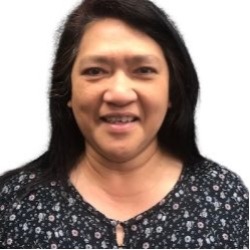
Mel Patrimonio
Mel Patrimonio is currently the Group Manager, Transaction Services of Health New Zealand.
She started in the health industry in 2009 as the Receivables Manager for Health Alliance. Since then, her role has expanded to include the Payables area. She is currently working on a proposal to amalgamate the (former) district health boards’ transaction services teams to a national team.
She had previously worked for Philips NZ, Waste Management and Ford Motor Company.
Key points from the webinar
Lindsay Horton, Kāinga Ora
Overcoming implementation challenges
- The biggest challenge was getting started—securing investment and stakeholder buy-in (CFO, Enterprise architect).
- Equally critical was getting the business ready, which involved a “PO, no-go policy” for purchase orders and an education program for 300 requisitioners to ensure timely receipting.
Measurable improvements
- Kāinga Ora significantly reduced peak flow backlog and now processes about 70% of invoices the same day (matched to PO and sent for review/receipting).
- The visibility provided by the tool allows the team to resolve problematic invoices more systematically. Crucially, they achieve 20% of invoices paid on the same day through auto-receipting low-value, low-risk invoices.
Future of automation
- The core future trend is the maximisation of the E-invoicing channel (Peppol).
- E-invoicing removes the problems of interpreting data from scanned PDFs, ensures data integrity, and facilitates two-way communication with suppliers.
- The main hurdle is getting suppliers to adopt the E-invoicing standard.
Mel Patrimonio, Health New Zealand | Te Whatu Ora
Overcoming implementation challenges
- The biggest hurdle was the change management and mind shift from manual to automated processes.
- This was compounded by implementing a national automation system across 20 different policies and ways of working, requiring the team to find a “common ground” on critical processes like a “PO first” policy.
Measurable improvements
- Automation has helped them minimise paying the incorrect supplier by validating invoices against the PO and master data, and checking things like the correct GST and bank account details.
- There’s also been a big gain in invoice visibility and tracking, replacing documents that were “in someone else’s desk”.
Critical success factors
- The most vital step is being very clear about business requirements and spending significant time gathering them with SMEs (Subject Matter Experts) involved from the outset.
- Mel also emphasised the need for a full and comprehensive training of end-users, moving beyond the initial “train the trainer” approach with re-training as necessary.