This website uses cookies to analyse our traffic and to ensure you get the best experience. By clicking “Accept”, you agree to our Terms of Use and Cookie Policy.
Insight from

Manual invoice processing is costly, slow, and prone to error. While much attention today is on AI, one proven technology is already delivering significant efficiency gains in Accounts Payable: PEPPOL einvoicing, which is already delivering real, measurable improvements by removing manual invoice processing.
I recently had the opportunity to be the speaker for a webinar focused on PEPPOL e‑Invoicing with FUJIFILM Business Innovations New Zealand, where we explored how this global standard is reshaping Accounts Payable processes in New Zealand and what organisations need to do to prepare.
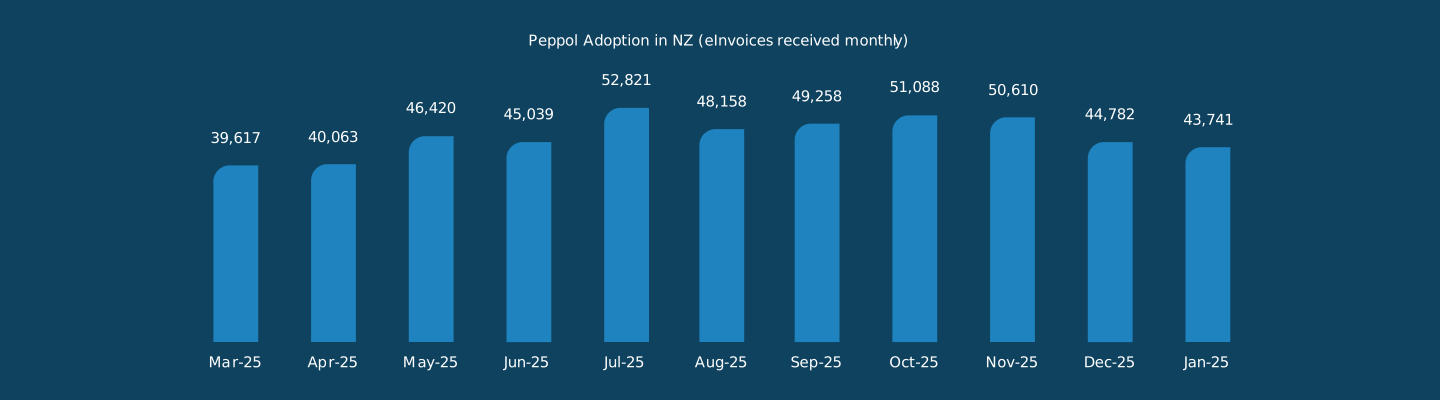
PEPPOL (Pan‑European Public Procurement Online) is a global, standardised framework that enables businesses to exchange invoices electronically in a secure, machine‑readable format. Although it originated in Europe, PEPPOL is now used by more than 60 countries and has been live in New Zealand since 2020. Adoption locally has been gradual, but it is accelerating as both public and private sector organisations recognise the efficiency and compliance benefits it delivers.
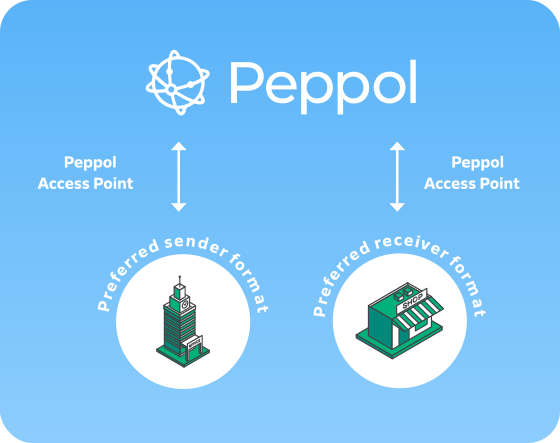
Traditional Electronic Data Interchange (EDI_ invoicing methods often rely on pointtopoint integrations or central hubs, which require custom mappings and technical agreements for every trading partner. PEPPOL uses a fourcorner model, where organisations connect once to a certified Access Point and can then securely exchange documents with any other organisation on the network. This significantly reduces integration effort while improving interoperability and security.
PEPPOL e-Invoicing is also becoming increasingly important from a regulatory perspective. The New Zealand Government has announced that from 1 January 2027, large suppliers—defined as those with revenue of NZ$33 million or more in each of the previous two years—will be required to send einvoices via the PEPPOL network when billing government agencies. This positions PEPPOL not just as a process improvement initiative, but as a future compliance requirement that organisations need to plan for now.
Accounts Payable platform Esker is a certified PEPPOL Access Point, allowing organisations to receive e‑invoices directly into the Esker Accounts Payable solution, which flows through to the Enterprise Resource Planning platform (ERP). Invoices arrive as structured XML data, along with a supplier-provided invoice PDF and supporting documents if applicable.
Esker generates a human‑readable PDF from the XML file to help users easily review and verify invoice details without needing to interpret the raw data. Key invoice details such as invoice number, date, total, and PO number are populated automatically, removing the need for OCR and manual data entry.
Supplier recognition is also transformed. Instead of relying on OCR, Esker uses information in the PEPPOL XML, such as GST numbers, to identify suppliers automatically against ERP master data. This drastically reduces errors, exceptions, and manual intervention.
For non‑PO invoices, line‑item details are populated directly from the XML, and invoices automatically balance, improving processing accuracy and speed.
Fewer touchpoints reduce manual handling

Higher data quality improves data accuracy

Faster invoice processing
Automatically balanced invoices
Stronger auditability and compliance

As e-Invoicing adoption accelerates and regulatory deadlines approach, PEPPOL provides a clear and practical path to more efficient, touchless invoice processing. PEPPOL is no longer a future concept – it is here today. And with Esker as an Access Point, organisations can meet upcoming New Zealand requirements while modernising Accounts Payable at the same time.